Baggage means the personal belongings and permitted items that passengers carry when travelling by flight. Depending on its size, weight, and airline rules, baggage can be carried inside the aircraft cabin or handed over to the airline at the airport.
There are two common types of baggage:
- Cabin Baggage: A bag that passengers carry inside the aircraft cabin. It is generally stored in the overhead compartment or underneath the seat in front, subject to airline rules.
- Checked Baggage: A bag that passengers hand over to the airline at the check-in counter or designated bag-drop facility. It is transported in the aircraft’s baggage hold and collected after arrival at the baggage claim area.
Why Is Baggage Important for Travellers?
Airlines have specific baggage allowance rules that determine the size, weight, and number of bags passengers can carry.
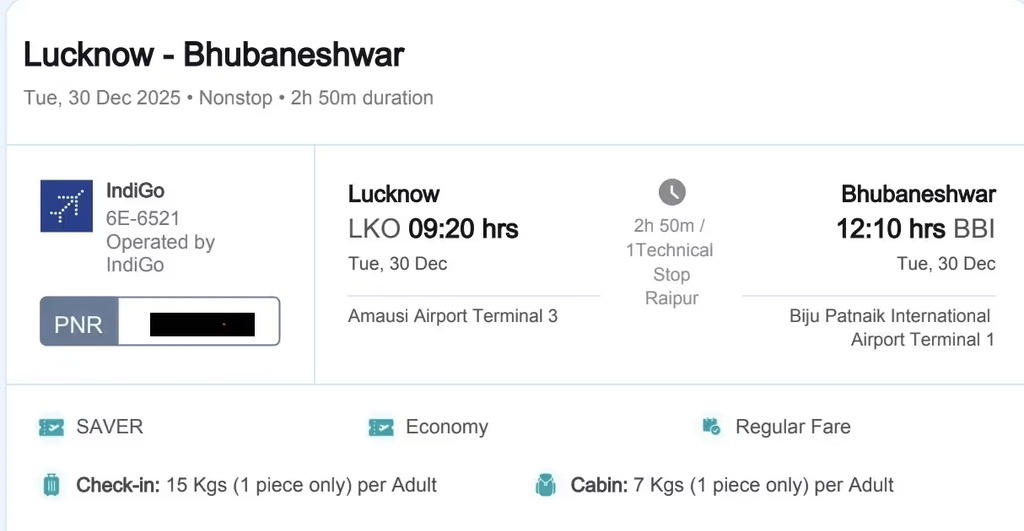
For example, some airlines may allow 7 kg of cabin baggage and 15 kg of checked baggage, but these allowances are not universal. They can vary depending on the airline, ticket type, travel route, and fare conditions.
Before travelling, passengers should check their airline’s official baggage policy to understand:
- Permitted cabin and checked baggage weight
- Maximum baggage dimensions
- Number of bags allowed
- Items that are restricted or prohibited
- Additional baggage fees, if applicable
Following the baggage rules can help passengers avoid delays, repacking, or additional charges at the airport.
For example, the IndiGo ticket shown below displays the following baggage allowance:
- Cabin baggage: 7 kg (1 piece per adult)
- Checked baggage: 15 kg (1 piece per adult)